Not long ago, kitchens were often designed to impress first and function second. Bright white cabinets, spotless counters, and carefully staged layouts looked great in photos but did not always support everyday life. We’ve seen this firsthand in many homes through the New River Valley.
That approach is changing.
As we move into 2026, kitchen design is shifting in a more practical direction. Homeowners are placing greater value on how their kitchens function day-to-day, including how they cook, store items, gather with others, and move through the space. The result is kitchens that feel warmer, more connected to the rest of the home, and easier to live in.
This shift is not about sacrificing beauty. It is about balancing appearance with durability, storage, and ease of use.
One of the most noticeable changes in recent years is a move away from overly polished, all-white kitchens and the long-running trend of cool gray finishes. These designs still have their place, but they are no longer the default choice for homeowners in Blacksburg.
Many clients are coming to us specifically asking for something that feels warmer, personal, and more functional.
We are seeing homeowners increasingly ask for:
Kitchens are also being designed as true extensions of the home rather than as standalone rooms. Visual continuity, clear circulation, and stronger connections to adjacent living spaces are now common design goals. This is especially true in older homes where kitchens were originally smaller and more closed off.
Beyond cooking and eating, today’s kitchens are being designed to support how families actually live throughout the day. Kitchen islands and adjacent spaces often double as work-from-home zones, homework stations, or informal gathering spots without interrupting the kitchen’s primary function.
Thoughtful layouts allow these activities to happen within the kitchen environment while remaining completely out of the way. In many homes, this takes the form of a flexible zone that feels connected to the kitchen, yet provides enough space for someone to spread out work, have conversations, or stay engaged with family while meals are being prepared. These flex areas also adapt seamlessly for entertaining, expanding the usable kitchen footprint and helping the kitchen and living spaces blend naturally during gatherings.
While showpiece kitchens still exist, function is now guiding most kitchen design decisions. Layout, storage, and usability are taking priority, with aesthetics built around these fundamentals. When those fundamentals are done well, the kitchen tends to age better, too.
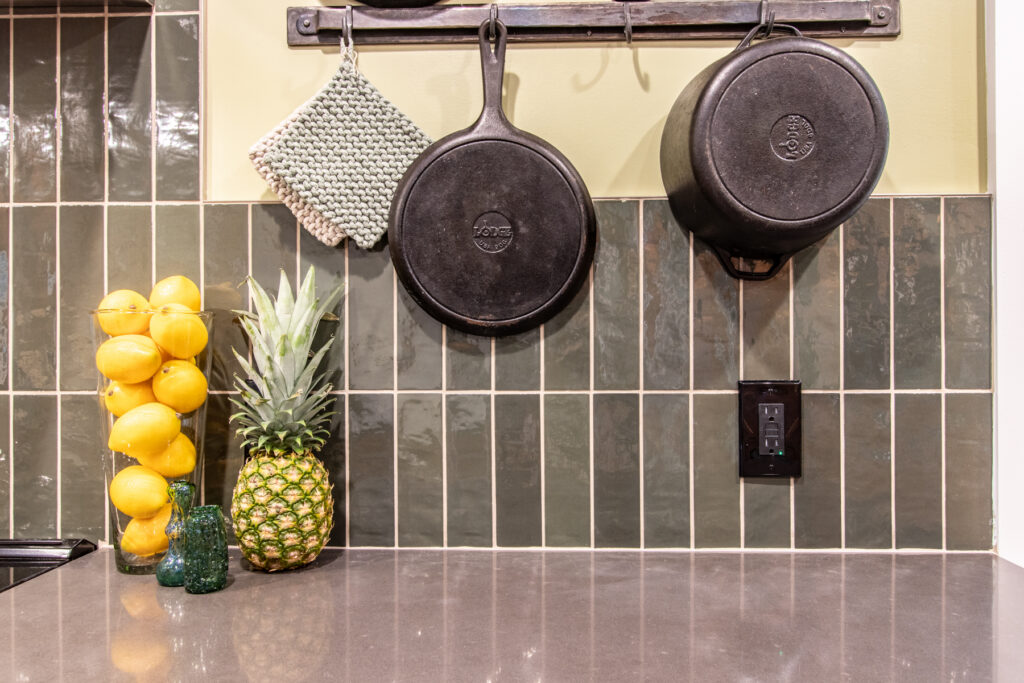
Kitchen backsplashes are becoming more than surface protection. They are increasingly treated as architectural elements within the kitchen.
Soldier-stack and herringbone tile layouts continue to grow in popularity, especially when the tile extends:
Backsplash niches are also emerging as a practical feature. Inspired by bathroom shower niches, these recessed areas provide convenient storage for oils, spices, and other frequently used items while keeping countertops clear of clutter. They are a small detail that can make day-to-day cooking easier.
Alternative backsplash materials are gaining attention as well, including:
Electrical planning is evolving alongside these material choices. Hidden or under-cabinet outlets are replacing traditional backsplash outlets, allowing for cleaner tile layouts and fewer visual interruptions.
Color trends are also softening. Stark white tile is gradually being replaced with softer whites, earth tones, and warmer neutral shades that feel more natural and cohesive within the space.
Cabinetry plays a major role in bringing warmth and character back into kitchens.
Wood cabinets are making a strong return, particularly in natural finishes and clear or lightly stained woods. Simple door styles that support easy cleaning routines are also becoming more common.
Painted kitchen cabinetry remains popular, but color selections are shifting toward richer greens, deeper tones, and warmer hues that are often being accented with some additional natural tone cabinetry. White cabinetry still appears in many kitchens, but it no longer dominates design conversations.
Functional upgrades are driving many kitchen cabinetry decisions, including:
Cabinet hardware is also receiving more attention. Often referred to as the jewelry of the kitchen, it has become an important way to personalize the space without relying on trends.
Commonly used cabinet door styles change from year to year and often align with the overall style of the home in which they are installed. Homeowners that remodel their transitional style homes often choose a raised panel door style, while craftsman and mid century modern homes install shaker style and slab/frameless door styles respectively. For the last 10 years the common cabinet door upgrade trend was full overlay cabinet doors rather than standard overlay. In the last several years, there has been a strong trend toward inset door designs rather than overlay doors. (graphic showing partial overlay vs. full overlay vs. inset)
Countertop selections are becoming more balanced and practical. Quartz and granite are now chosen at nearly equal rates, with decisions based on budget, performance, and overall design goals rather than popularity alone.
Rising quartz prices have led many homeowners to reconsider granite and appreciate its natural variation and long-term durability. There is also growing interest in mixing countertop materials, such as:
Mixed countertop materials also plays into the function of the countertops. Some are better if you use your countertops for baking, canning, etc.
Wood countertops are typically used as accent features rather than throughout the entire kitchen. High-quality butcher block prep areas and live-edge slabs on islands or bar tops are common applications that add warmth without compromising functionality.
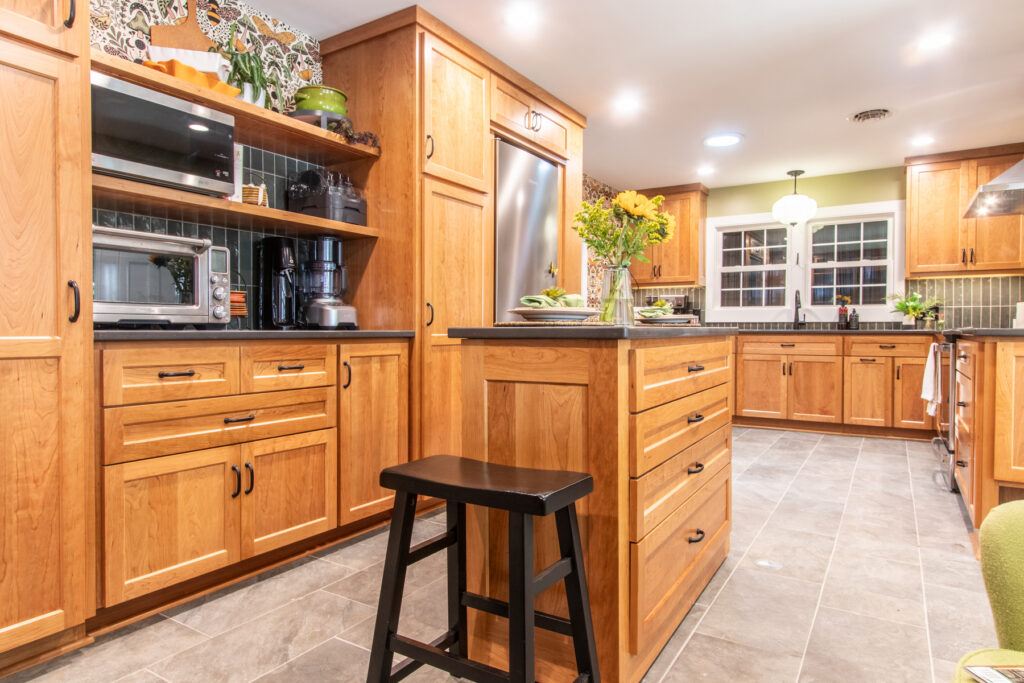
Storage planning has become one of the most important aspects of kitchen design for homeowners in Blacksburg. It is no longer treated as a secondary consideration.
Corner cabinets are becoming less desirable in some layouts. When they are included, they almost always incorporate solutions such as lazy Susans or pull-out access systems. In some cases it is chosen to leave the space as “blank unuseable” space verses putting in a corner or blind cabinet..
Commonly requested storage features include:
The emphasis is on accessibility and efficiency. Kitchens are being designed so that frequently used items are easy to reach and simple to organize.
Lighting continues to play a critical role in both function and atmosphere.
Recessed lighting remains a foundational element, but most kitchens now incorporate multiple layers of lighting, including:
Decorative lighting, such as pendants over islands, peninsulas, or sinks, is being used thoughtfully to add character without overwhelming the space or interfering with task lighting.
Well-planned lighting improves both usability and comfort throughout the kitchen.
Kitchens heading into 2026 are warm, practical, and carefully planned. They are designed around how people actually live, cook, and gather in their homes.
Rather than focusing on short-lived trends, homeowners are prioritizing long-term usability, flexible design choices, and a thoughtful balance between appearance and performance. These kitchens are built to support daily life while still feeling intentional and well-designed.
Contact Blue Ridge Design Build to start designing your custom kitchen.

 Request a Consultation


