Deciding to invest in a bathroom remodel is exciting, and most homeowners begin with a long list of ideas before having a clear understanding of how those plans align with their bathroom remodeling budget.
Early in the bathroom remodeling process, it’s easy to say yes to everything. Heated towel warmers, large custom showers, extensive tile, and added cabinetry all feel like reasonable upgrades when you’re still in the idea phase. As cost becomes clearer, many of those “nice-to-have” features naturally take a backseat, allowing your true must-haves and non-negotiables to come into focus.
Overspending in a bathroom remodel is rarely intentional. It typically comes from not knowing where the budget is going at the beginning of the project.
At Blue Ridge Design Build, a big part of our process is helping homeowners understand bathroom remodeling costs early, so the decisions made for your bathroom upgrade are based on real numbers.
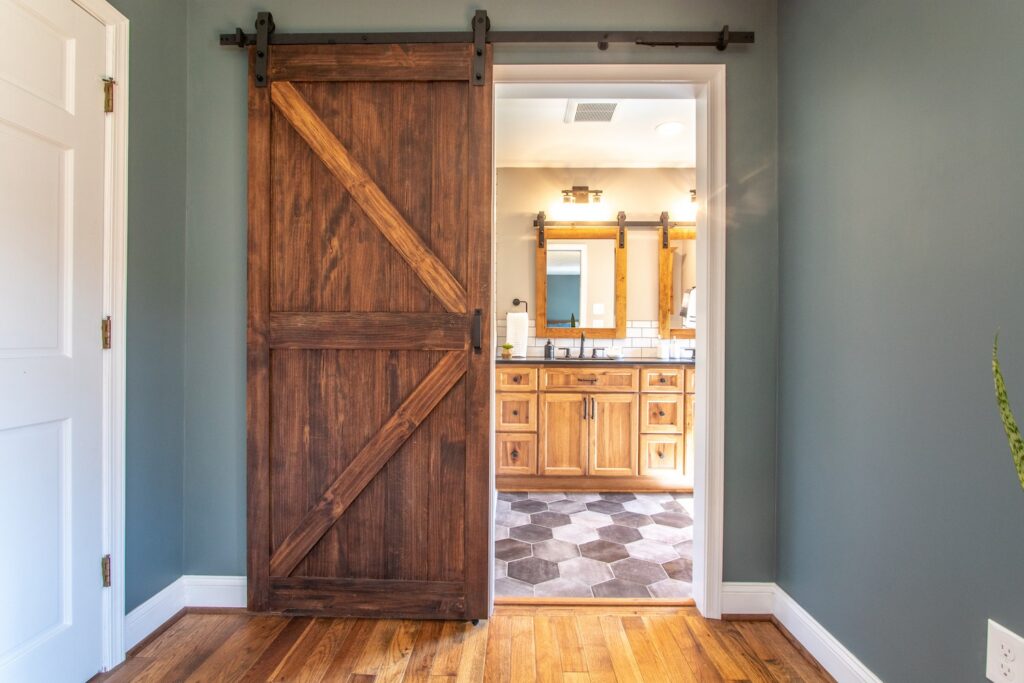
Tile is one of the most common areas where bathroom remodel budgets get out of hand. We often see homeowners come in with a specific vision, especially for the shower, and it’s easy for those selections to add up quickly.
Large tile showers, full wall coverage, and higher-end materials can significantly increase both material and labor costs. The shower itself is usually the most expensive part of the bathroom remodel. Expanding the size, adding more tile, or including multiple features can drive up the budget without always improving how the space works day to day.
We also see projects where too many features get layered in. Adding more materials or upgrades doesn’t always lead to better results; it just increases costs.
Trend-driven choices can play a role as well. Freestanding tubs, excessive wall tile or wallpaper, specialty features like auto on/off faucets, and higher-cost finishes like black fixtures may look appealing, but they don’t always get used the way homeowners expect.
Most of the time, it’s not one big decision that pushes a project over budget. It’s a series of smaller choices that add up along the way.
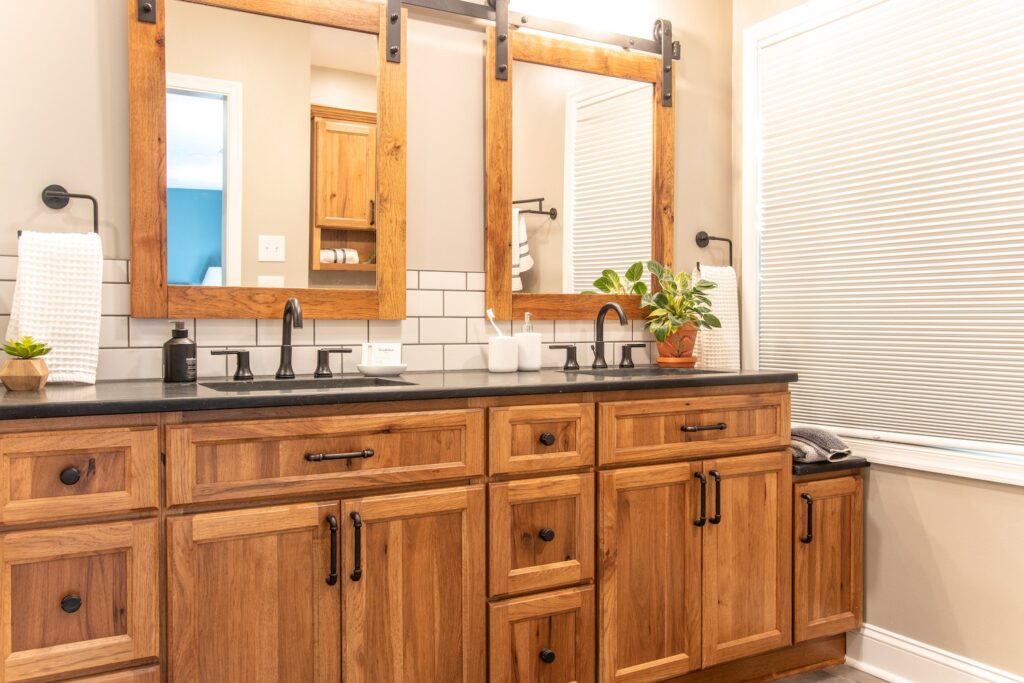
There are a few areas where we typically recommend investing more upfront because they have a direct impact on how the bathroom performs over time.
Plumbing fixtures are one of them. Higher-quality brands like Delta, Moen, Kohler, and Hansgrohe tend to last longer and allow for easier repairs when parts wear out, instead of needing to replace the entire fixture. Control valves and fixtures are especially important since they’re used every day.
Cabinetry is another area where quality matters. Bathrooms deal with constant humidity, and materials like particle board or MDF, Medium-Density Fiberboard, don’t hold up well over time. Solid wood cabinetry is a better fit for this environment and tends to last much longer.
We also recommend investing in durable materials. Porcelain or ceramic tile works well for showers and floors, and quartz or granite are reliable choices for vanity tops.
Shower doors are something homeowners don’t always think about, but they can make a big difference. A door with 3/8″ glass or thicker feels more solid and holds up better over time. In many cases, spending a little more here upfront can help avoid issues later. The tempting price tag on the “all-in-one” shower door kits you can purchase off the shelf often lose their appeal when you get them installed and feel their quality, or lack thereof.
Lighting is another area worth considering. Adding natural light, like a window, skylight, or sun tunnel, or incorporating layered lighting can make a noticeable difference in how the space functions and feels day to day.
In situations where space is limited, investing in layout changes or additional space might be the best way to improve flow in the bathroom. While that increases the upfront cost, it can make a positive impact on how the bathroom functions long term.
Some of the most important parts of a bathroom remodel are the ones you don’t see.
Ventilation is critical. A bath fan should always be vented to the outside, not into the attic, to properly remove moisture. Newer fans are quieter and more efficient, and we typically recommend running them for about 30 minutes after a shower. Installing an automatic timer can make that easier to manage.
Waterproofing is another area we don’t recommend compromising on. Systems like Schluter or HydroBlok, when installed correctly, help protect against leaks. A flood test, where the shower base is filled with water for 24 hours, is a best practice we use to make sure everything is sealed properly before tile goes in.
Behind the walls, plumbing and electrical systems should also be addressed. That includes making sure plumbing is up to code, correcting any past drainage or water pressure issues, and upgrading electrical components to meet current GFCI safety requirements.
We also advise being careful with lower-cost fixtures. Some products sold online or through big box stores may look similar, but they’re often built to a lower standard. This is one of those areas where you really do get what you pay for. Compromising on this may seem like a good idea at the moment, but the difference will start to show up before long.
Not every upgrade needs to be expensive to make a noticeable difference. A well-designed bathroom doesn’t require top-tier materials in every area. There are multiple ways to manage bathroom remodeling costs without sacrificing the overall look.
One of the most common is using a prefabricated shower pan instead of a tile floor. These one-piece systems, made from materials like fiberglass, acrylic, or cast iron, are easier to clean, more cost-effective, and reduce the chance of leaks since there are fewer installation variables.
Tile selections can also be simplified. Extending the shower tile to the ceiling is another way to give the space a more finished look without a major increase in cost. Using larger format tiles, limiting decorative elements, and keeping a simple tile layout/design can go a long way. Fewer grout lines make maintenance easier, and choosing an earth-tone grout helps hide staining over time.
For cabinetry, vanity kits can be a practical alternative to fully custom options while still providing a clean, functional look.
Even smaller decisions, like choosing chrome finishes instead of more expensive options, can help keep the budget on track. Many people don’t realize how much more expensive a matte black faucet of the same style and model is than a chrome option!
Luxury Vinyl Tile (LVT) is another option we recommend for flooring. It’s more budget-friendly than ceramic tile and still performs well in a bathroom.
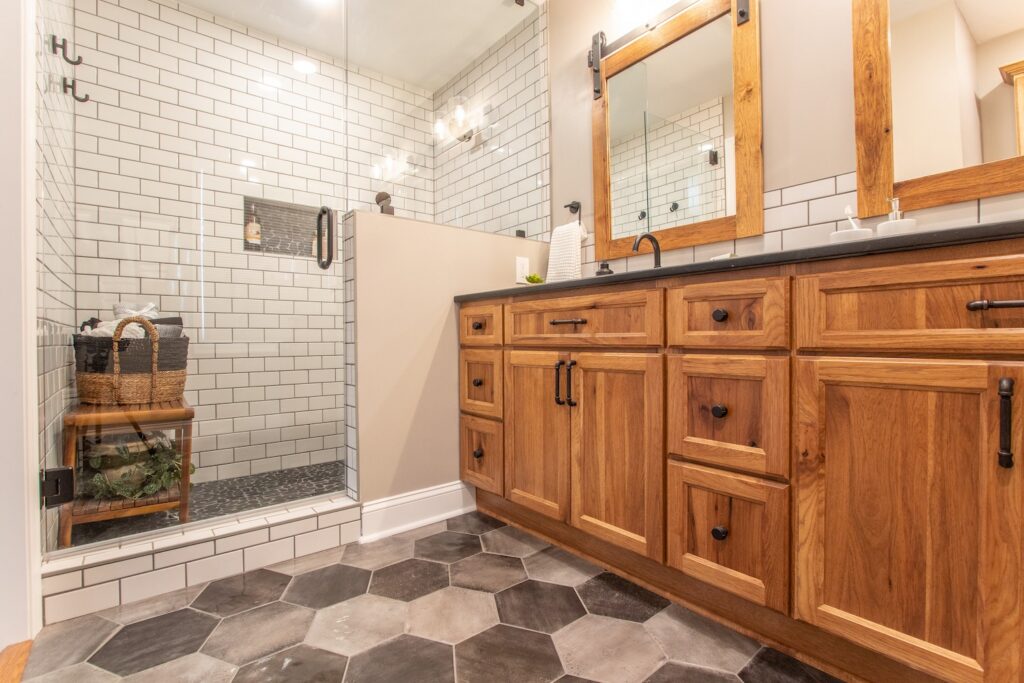
The most successful bathroom remodels are the ones where homeowners are clear on what matters most to them.
For some, that might be a fully tiled shower. For others, it could be higher-quality fixtures or specific features like a bidet seat. The key is focusing on the elements that will have the biggest impact on how you use the space.
Working with a professional remodeling company like Blue Ridge Design Build allows you to see real costs early and compare options before making final decisions. That makes it easier to make trade-offs and adjust the plan as needed.
As Logan, Production Manager at Blue Ridge Design Build, explains: “Our process is set up to walk our clients through the design and estimating phase in a way that optimizes the project for their budget. Since we are design build, our goal is to plan something that is ultimately going to be beautiful but also affordable for our client, so we get to build it”!
Keeping the existing layout is one of the most effective ways to control costs, since moving plumbing and electrical can quickly increase the scope of work. Choosing simpler options, like standard shower systems or single diverter fixtures, can also help stretch the budget further.
Most projects start with a broad vision and become more focused as decisions are made. That’s a normal part of the process and usually leads to a better end result.
Smaller updates, like paint or lighting changes, can also be layered in strategically without significantly increasing the overall budget.
Trends can influence design decisions, but they don’t always hold up over time.
Some features may look appealing at first, but don’t get used as much as expected. Instead of focusing on what’s popular at the moment, it’s usually better to think about how the space will function long term.
Choosing durable materials and making practical design decisions helps avoid the need for updates down the road.
A bathroom that’s built well and designed around everyday use will continue to perform long after trends have changed.
Every homeowner’s idea of what’s worth the investment is a little different. The goal is to understand where your budget will make the biggest impact. A thoughtful approach helps avoid overspending while still achieving a high-quality result.
At Blue Ridge Design Build, we work with homeowners throughout the process to help them make informed decisions, from where to invest to where it makes sense to scale back. A successful bathroom remodel isn’t about including everything. It’s about making the right choices for your space, your priorities, and how you plan to use it every day.
If you’re considering hiring a bathroom remodeling expert in Blacksburg, VA, contact the Blue Ridge Design Build team.

 Request a Consultation


