
A kitchen remodel is one of the most exciting transformations you can make in your home, but it’s also one of the most complex. Between layout decisions, kitchen appliance selections, lighting plans, and budget considerations, it’s easy to feel overwhelmed or unsure of what truly matters.
To help you navigate the kitchen remodeling process with confidence, we’ve created a comprehensive list of kitchen remodel Do’s and Don’ts.
These insights combine practical kitchen design wisdom, construction best practices, and real‑world lessons learned from countless renovations.
Whether you’re planning a full gut renovation or a thoughtful kitchen refresh, this guide will help you think of ways to avoid costly mistakes and create a kitchen that’s beautiful, functional, and built to last.
In the months & years prior to your kitchen remodel, make note of items to strategically design your kitchen around what will actually work for you!
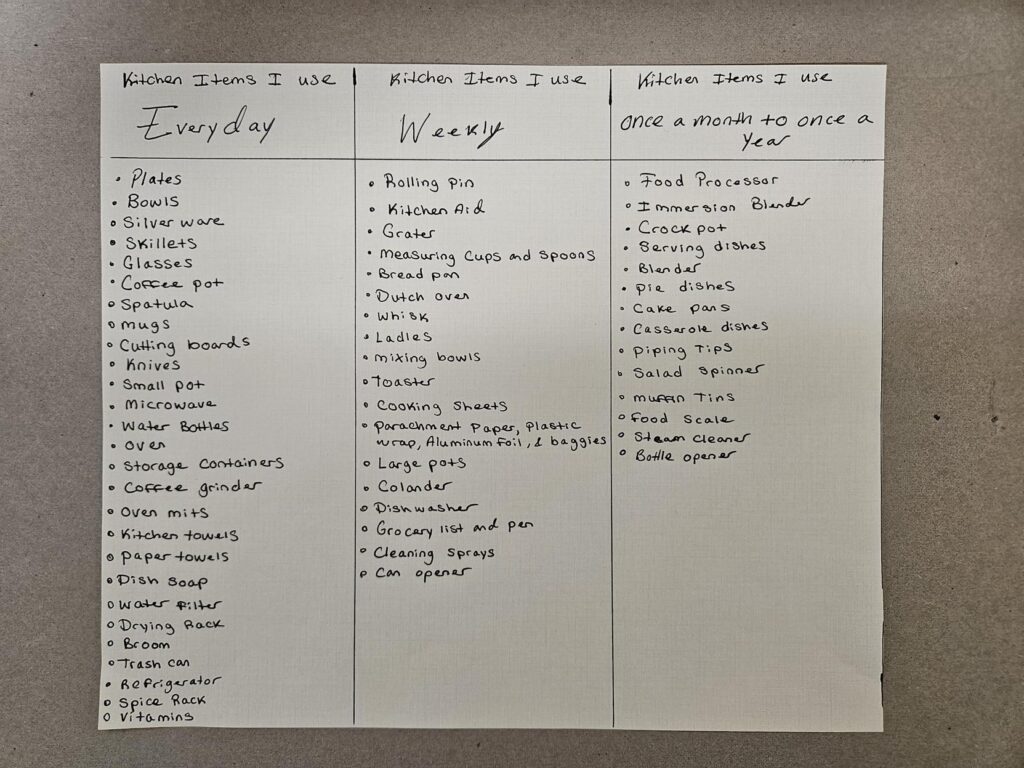
Make a list of all the things you use on a daily, weekly, monthly, and yearly basis. This priority list will help you shape kitchen storage plans for the items that get used the most heavily. This list should encompass everything including dishware, countertop kitchen appliances, storage containers, and even non-food related items that pertain to activities that happen in the kitchen.
Here is an example of what yours should look like:
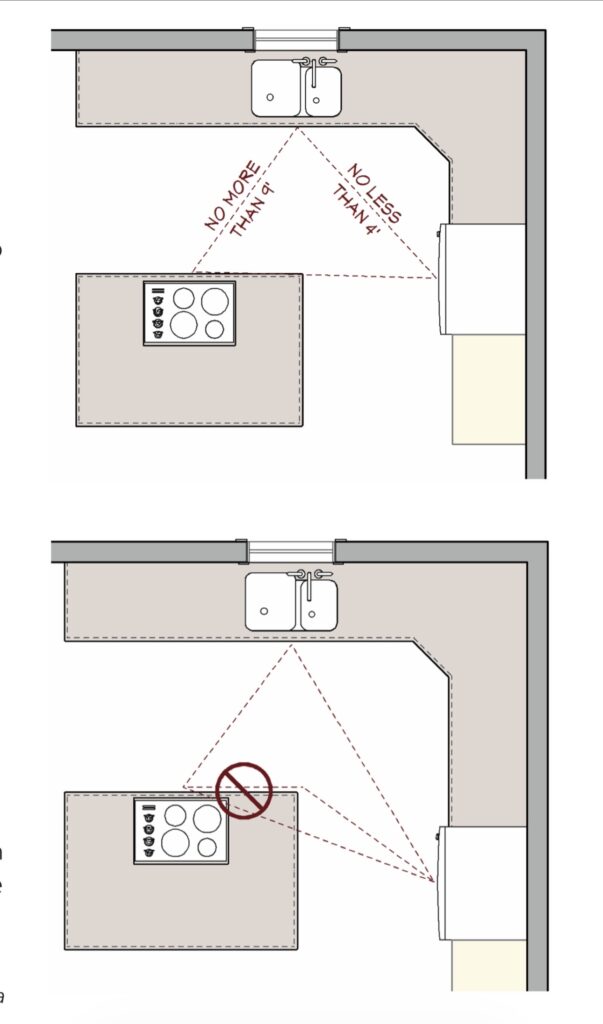
When planning a kitchen remodel, one classic concept still stands strong, and that is the work triangle. This simple idea connects the refrigerator, sink, and range in a three-point layout, creating an efficient flow for cooking. It’s been around for decades because it works.
Of course, kitchens today are more complex. Extra appliances, double sinks, and multiple cooks can make things tricky. That’s where “activity zones” come in. These are essentially multiple triangles for different tasks.
Still, the National Kitchen & Bath Association (NKBA) recommends keeping the main triangle intact, with the sink between the fridge and the cooking center. Through our experience designing and working in kitchens, we have found this to be the ultimate kitchen efficiency solution.
Why does this matter? Distance. Each leg of the triangle should be 4–9 feet, with a total no more than 26 feet. This formula accounts for some good counter space between without enlarging your kitchen into a marathon track. Exceeding this rule will often make the cook feel like they are doing more walking than cooking.
Another factor in this triangle is to avoid obstacles; an island shouldn’t cut into the triangle by more than 12 inches. Keeping guest/family traffic out of the triangle is also important, nothing disrupts cooking (or safety) like someone crossing your path while you’re carrying hot pans.
Finally, plan for space. Work aisles should be ideally between 42-48 inches wide for smooth movement. A well-designed triangle isn’t just tradition, it’s the foundation of a functional, stress-free kitchen.
In the old days, standards were developed for kitchen appliance sizes and many other home fixtures. These standards still exist and are often still used for kitchens today.
For example, a large majority of stove top range/oven combo units measure 30 inches wide and 36 inches tall. Additionally, lots of refrigerators measure 36 inches wide and about 70 inches tall. These parameters can be used to base a rough design concept off of, but we always recommend picking the actual kitchen appliance prior to detailing the design of your kitchen cabinetry.
Your kitchen cabinetry should be designed and optimized for you and the largest thing that it has to interface with is the appliances you will be installing. Because of this and the wide range of appliances available, this is an important first step. For simple more traditional kitchens, this may not carry as much weight but the more you customize your appliance package, the more you will have to coordinate these two.
When selecting your kitchen appliances, keep in mind the following:
Refrigerator
Cook Station
Oven
Additional Appliances
Because choices abound when it comes to appliances, we recommend nailing down your package early. There is no such thing as too much research on a purchase like kitchen appliances.
Second to ensuring a good appliance fits in your kitchen design is choosing a kitchen appliance brand and supplier wisely. We always recommend clients work with G&H appliance which are local to Christiansburg, VA for two main reasons:
I recently talked to my neighbor who was promised a fridge installation between 12-1pm from our local big box store. She had her fridge all emptied and ready to be swapped and waited around for an hour just for the delivery driver to show up late and then refused delivery because he didn’t want to attempt driving up their semi-steep driveway. This is one of many similar stories we’ve experienced in the appliance world.
The kitchen is a functional space that you use daily, not just a showpiece (no matter how hard you try to keep it Pinterest-worthy). So why not plan accordingly? Creative design can open opportunities to conceal spaces that are regularly used, allowing you to tuck the “mess” away when guests come over.
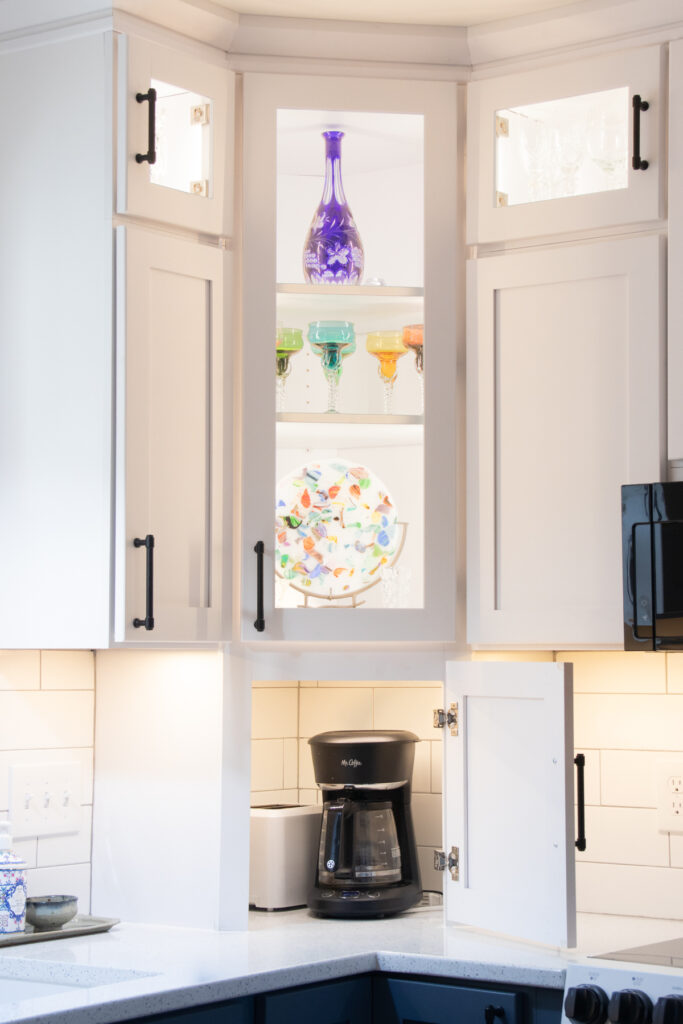
Here are a few ideas on how to achieve this:
With the right modern cabinet hardware, you can create doors that cover this workspace or open and tuck away while those items are in use. This space can even include electrical outlets within the back of the cabinetry, so those items never have to be unplugged.
The typical modern cabinet company provides lots of cabinet innovations to increase options for organization. While some of these options can provide solutions you never knew were possible, it’s important not to overcrowd the kitchen cabinet space with so many accessories that you don’t have space for some of the simple items that just need some plain old cabinet shelving.
If you make a list of items that you use often in your kitchen, you will notice that a lot of those items either need a simple drawer to live in, a shelf to sit on, or a rack to hang on.
So, it is important to make sure you have room for all the essentials before you install too many fancy extras like mixer lifts, dedicated spice cabinets, and big pull-out accessories. This is especially important to be mindful of in smaller kitchens!
There is a lot of expertise required to remodel your kitchen well, especially when changing layouts. You may want to consult a kitchen designer.
Kitchens are arguably one of the most difficult rooms to plan and build in a house. The kitchen is often a combination of all the interior finishes and trades professionals required to build a house all in one small space and this requires heavy coordination and planning. Consider the fact that there is an entire community of people who make it their profession to design kitchens!
From cabinetry organization to backsplash trends and tips of the trade, the choices can feel overwhelming. If that’s the case, consider working with a kitchen designer. They’re trained to guide you through the process, help you make smart decisions, and create a kitchen that’s both beautiful and functional.
A successful kitchen remodel starts with one thing: planning. And lots of it. Before you dive in, set clear goals and focus on what you truly need, not just what you want.
Are you remodeling your kitchen to impress the neighbors or maximize resale value for a future buyer? If so, it’s time to take a pause. The best kitchen remodels aren’t driven by outside expectations, but by how you actually live in the space.
Your kitchen is the heart of your home, and the only person you should be designing for is you. Not what others think and certainly not the next homeowner. You’re the one who will cook, entertain, and live in this space for years to come. So why spend thousands creating a kitchen for someone else’s taste?
Here’s the truth: if a new owner buys your house, chances are they’ll remodel anyway to fit their own needs. So don’t waste your time and money chasing trends or resale fantasies. Instead, focus on what makes your life easier and more enjoyable—whether that’s extra prep space, a cozy breakfast nook, or storage that works for you.
If you’re investing in a remodel, make it a kitchen you love. Forget the Joneses. Forget “what if.” Design for yourself, and you’ll never regret it.
Design for Function First
Choose Materials and Kitchen Appliances Wisely
Maximize Storage & Workspace
Light It Right
Plan for Electrical & Mechanical Needs
Keep the Big Picture in Mind
Enjoy the process — this is an exciting transformation.
Choose colors and finishes intentionally. Base these decisions on the large items first. For example, choose your cabinets and base additional selections on this choice.
Ensure your kitchen complements the rest of your home.
Maintain clear communication with your designer and contractor.
Avoid Common Design Pitfalls
Don’t Overlook the Details
Avoid Costly Mistakes
Stay Realistic About DIY
Keep Perspective
A well‑planned kitchen remodel is a balance of beauty, function, and thoughtful decision‑making. These Do’s and Don’ts are designed to get you thinking about and researching the right things. There is nothing wrong with dreaming about your finished kitchen project, but if you focus on the planning, you’ll set yourself up for a smoother process, fewer surprises, and a finished space that feels tailored to your life.

 Contact Us


