Cabinets are one of the biggest visual drivers in a kitchen. That’s why understanding how to choose the best kitchen cabinet design when remodeling is so important. They do more than provide storage; cabinets play a major role in how a space feels the moment you walk in.
From modern to traditional and transitional, there are a variety of cabinetry styles to choose from. We’ve found that most homeowners already have a general sense of what they want before they even start looking at cabinets. But for those investing in a kitchen remodel who are unsure of which cabinets would best suit their spaces, here’s what you need to know.
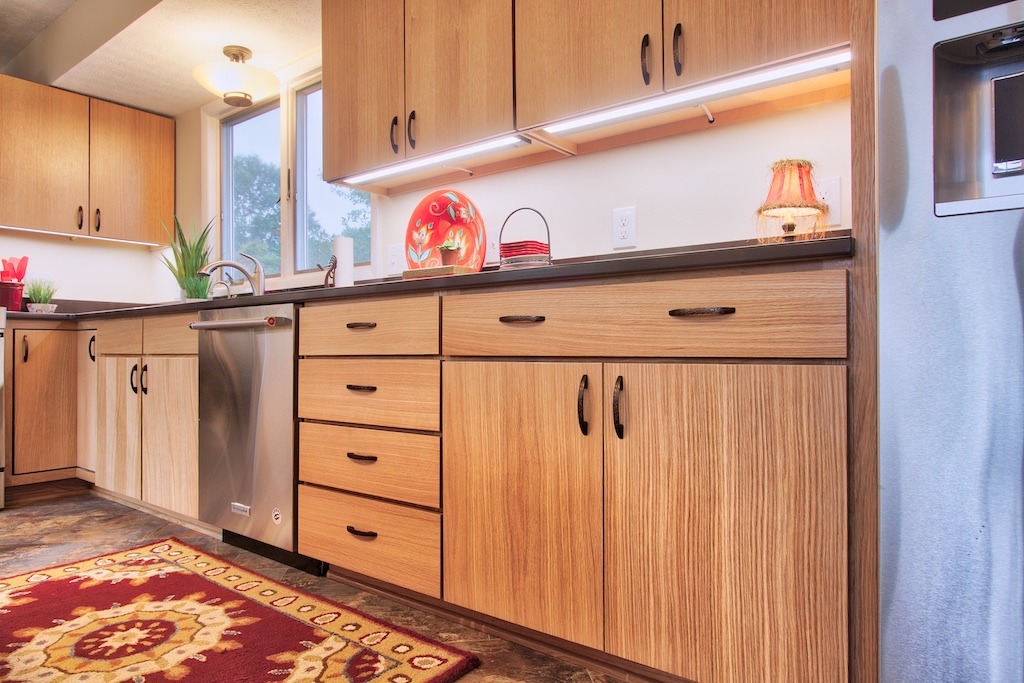
Understanding your kitchen remodeling budget is really where to begin. This is because the budget is going to shape cabinet decisions early.
It determines:
In many cases, cabinet options are narrowed down before a homeowner sees the first sample. During our home remodeling process, we’re asking the homeowner questions to help determine which design direction to take. This is not to limit choices, but to keep the project realistic and aligned with the homeowner’s overall investment.
A realistic kitchen remodeling investment in cabinetry falls in the $15,000–$35,000+ range, depending on size, quantity, and features. Larger kitchens, or those with extensive features, can easily exceed the $35,000+ investment range. On the other end, smaller kitchens using stock cabinetry may come in lower, around $10,000, but once you move into semi-custom or custom, that range becomes the baseline.
One of the biggest mistakes we see is designing a kitchen around cabinet ideas that don’t match the budget.
Before deciding on door styles or finishes, it’s important to step back, look at the home as a whole, and ask: “What do you want the space to feel like?” and “How should it connect to the rest of your home?”
Cabinets should align with:
If your kitchen opens into a living or dining space, the cabinetry needs to feel cohesive with those areas. That doesn’t mean everything has to match exactly, but it should feel like it belongs in the same house. Details like trim, edge profiles, and finishes are what tie everything together, and those decisions are easier to make when you’re thinking about the full space, not just the kitchen.
The size of your kitchen and the number of cabinets you include will directly impact cost. A larger layout or more storage sounds appealing, but every additional cabinet adds material, labor, and cost. Cabinet count plays a big part in the overall pricing, and it’s important not to over design a space beyond what the budget can realistically support.
A well-designed kitchen isn’t about adding more. It’s about adding what makes sense for how you actually use the space and how the space can better meet your needs.
One of the most common surprises for homeowners is how quickly cabinet features can increase the overall cost. Things like trash pull-outs, spice racks, sliding trays, and drawer organization systems are all useful. But when they’re added throughout the kitchen, the cost can escalate quickly, and will often double the price of the cabinetry.
The goal isn’t to avoid these features. It’s to be intentional about where they actually improve your day-to-day use of the kitchen.
Most cabinets look similar when they’re brand new, but the difference shows up later.
Durability, wear over time, and how well the cabinets hold their structure are all tied to how they were built. Many homeowners will select cabinetry that feels cost-effective, then find out a few years later that it may not have been the best choice when things start to fall apart. That’s why cabinetry construction matters, even if it’s not the most visible part of the decision.
Our team of designers at Blue Ridge Design Build works closely with homeowners, understanding that they want and need help selecting the best option that lasts and fits their budget.
A helpful way to frame cabinet decisions is to ask: Is this a 5-year kitchen or a 25-year kitchen?
Because those are two very different investments.
Most homeowners remodel their kitchen once. That makes it worth thinking long-term, even if it means adjusting the budget slightly to get better quality and more durability.
Cabinet boxes are the structural backbone of your cabinet construction, and the material matters.
All-plywood construction is generally considered the most durable option. Plywood is made from layers of real wood laminated together, which creates strength and stability. It resists warping and helps cabinets stay square over time.
Plywood qualifies as real wood because it’s made from layered wood veneers. Particle board and fiberboard do not fall into that category. So when you hear “all wood cabinets,” it often refers to plywood construction, not solid wood panels throughout.
Particle board and fiberboard are more cost-effective, but they don’t offer the same long-term performance. In some cases, painted door panels use these engineered materials to prevent warping, especially in thinner sections. This is intentional and helps maintain the integrity of the cabinet over time.
This is one of the first structural decisions and sets the foundation for how the cabinets function and look. Framed cabinets are more common in traditional and transitional designs, while frameless kitchen cabinets are more common in modern designs because they have a cleaner, more streamlined look. It’s less about what’s “better” and more about what fits the design direction of the kitchen remodel.
Overlay style refers to how the cabinet door for a framed cabinet sits on the framed cabinet box.
Common options include:
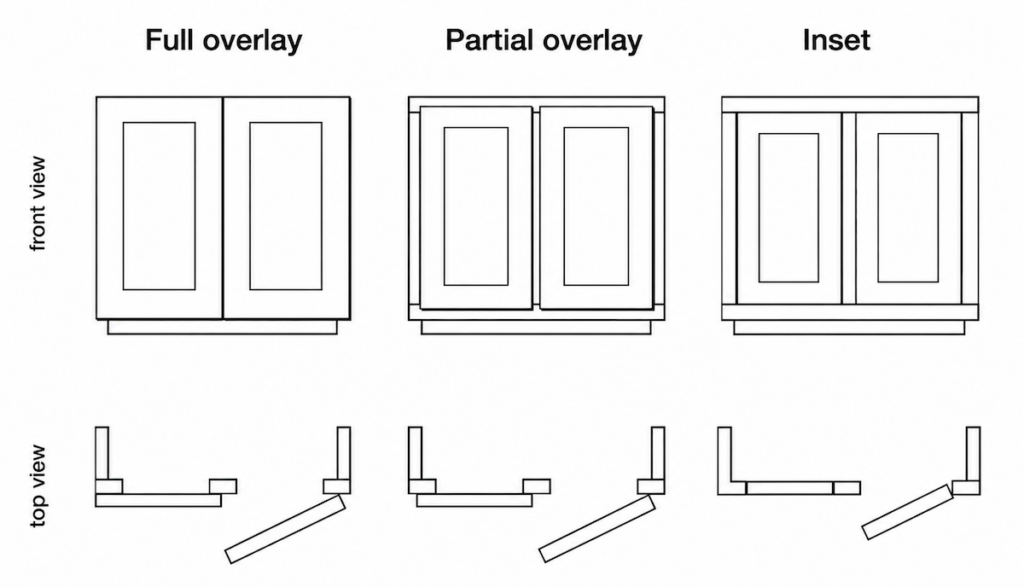
Inset cabinets, where the door sits flush inside the frame, have become more popular recently because they create a more refined, custom look. This is one of those details that seems small, but it has a big impact on the overall feel of the kitchen.
Door style is one of the most noticeable design choices. Shaker doors are widely used because they work across a range of styles. Slab doors lean more modern. More detailed profiles tend to push the kitchen toward a traditional look.
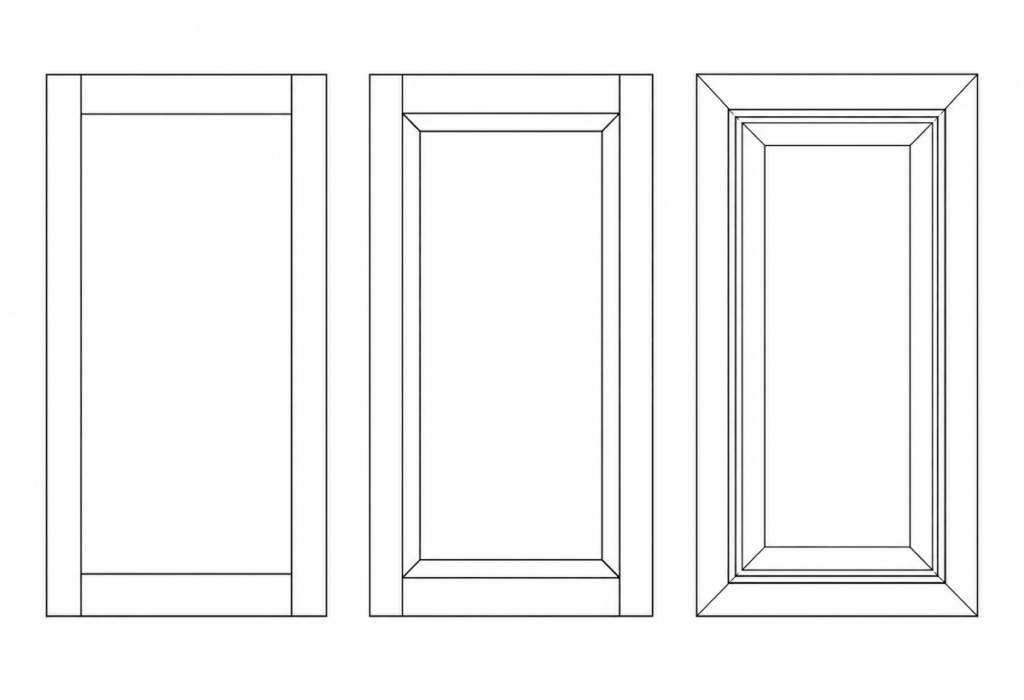
You can add additional customization to each door style by adding edge profile details and creating more unique combinations of the two. Add info about edge profiles.
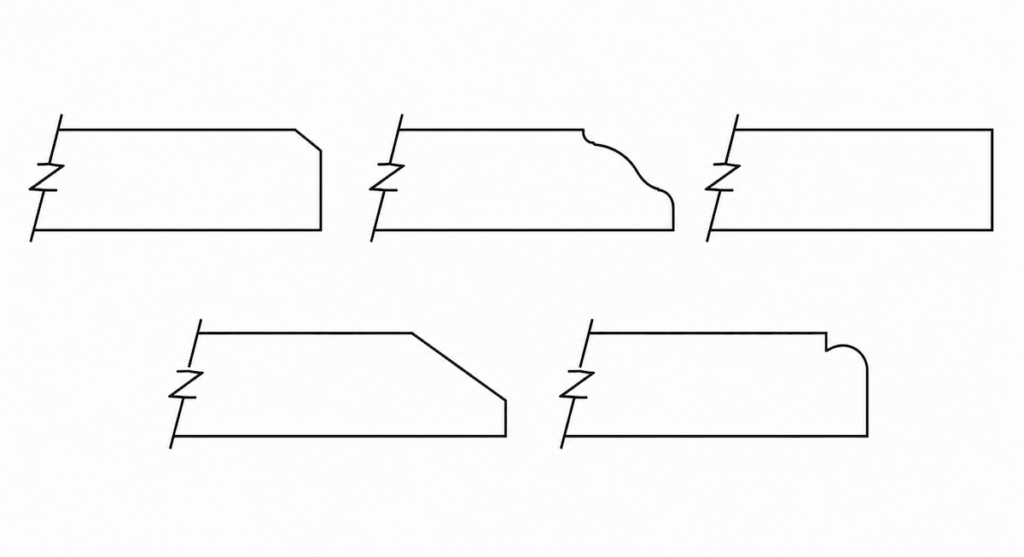
Trends come and go, but simpler profiles tend to hold up longer.
Beyond the main selections, there are a number of details that shape the final look:
These elements are where design starts to get more layered. It’s also where working with a designer makes a big difference, because these details are what take a kitchen from basic to well-thought-out.
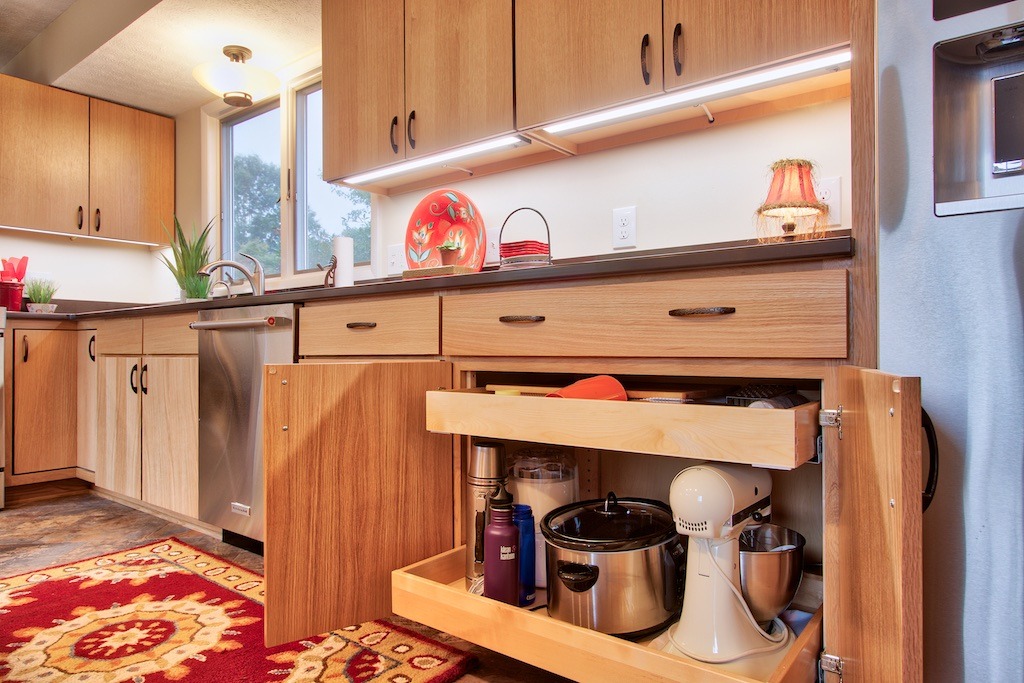
Interior cabinet features are all about how the kitchen functions day-to-day. They can make everyday tasks easier, improve organization, and help the kitchen work better overall. Some of the most common options include sliding trays, trash and recycling pull-outs, spice storage, utensil dividers, mixer lifts, and even built-in charging stations.
As helpful as these features are, they can quickly increase the cost and reduce flexibility if overused. A well-designed kitchen still relies on simple, functional storage just as much as specialized features.
Stock cabinets are pre-made and available off the shelf. They come in limited sizes, styles, and finishes, and they’re typically the most budget-friendly option. They can work well for small projects or quick updates, but they often require compromises in fit and design.
Semi-custom cabinets are built for your project, but within a defined system. They offer flexibility in sizing, styles, finishes, and features, allowing you to create a tailored kitchen without starting from scratch.
Each cabinet is built as its own unit and then installed together to create a fully integrated look. Once everything is in place, most people wouldn’t be able to tell the difference between semi-custom and fully custom cabinetry.
What makes this option work so well is the balance in quality and value. You get a high level of customization, a manageable timeline, and a price point that can be adjusted based on how far you want to go with features and finishes.
Custom cabinets are built specifically to the dimensions of your exact space. They allow for complete flexibility in design, materials, and construction. Cabinets can be sized precisely, combined into larger units, and designed to fit even the most unique spaces. Custom cabinetry typically comes with a higher price point and longer production timelines, sometimes taking several months from start to finish.
There’s a noticeable shift happening in cabinet design. Warm wood tones and natural finishes are making a strong return, replacing the cooler gray palettes that dominated for years. Light, airy wood tones are especially popular, along with mixing finishes, like pairing a painted island with perimeter wood cabinetry.
At the same time, it’s worth being cautious with anything that feels overly trend-driven when designing your kitchen. Bright colors or highly specific styles can feel dated within a few years. Anything that feels very trendy but permanent is something to approach carefully.
Timeless choices continue to hold their ground. White cabinetry, natural wood tones, and simple door profiles remain reliable options that age well.
This decision often comes down to preference, but there are some practical differences.
Painted cabinets offer a wide range of color options and are easy to align with any color palette, but they can show wear more easily over time, especially in high-use areas.
Stained cabinets highlight the natural wood grain and tend to feel more timeless. They also do a better job of hiding everyday wear and tear, which can make them a more durable option in the long run.
Many homeowners come in with a strong opinion one way or the other, but seeing both options in person helps clarify the decision.
Kitchens today are used for more than just cooking. They’re spaces where people gather, work, prepare meals, help with homework, and spend a lot of their day. Because of that, cabinet decisions should be based on how the space is planned to be used.
When you combine that with a clear understanding of your budget, your style, and how long you plan to stay in your home, the right cabinet decisions become much easier to make. When designed with intention, cabinet choices create a kitchen that not only looks good, but works the way it should for years to come. Contact BlueRidgeDesign.Build to get started.

 Request a Consultation


